
Driverless cars are becoming more visible on U.S. roads, creating new questions about how automated vehicles should react to ambulances, fire trucks, police officers, road closures, and active emergency scenes. When an autonomous vehicle fails to recognize emergency conditions or obstructs first responders, an accident investigation may involve software performance, vehicle sensors, fleet operations, and traditional traffic rules.
The issue gained national attention in July 2026. The National Highway Traffic Safety Administration, or NHTSA, said it had identified a pattern of driverless automated vehicles interfering with law enforcement officers and other first responders. According to the agency, documented incidents included automated vehicles entering active emergency scenes, blocking ambulances or firefighters, and failing to respond properly to flashing lights, traffic cones, smoke, fire, and flares.
These situations highlight one of the central challenges of autonomous transportation. A driverless system does not simply need to follow lane markings and traffic signals. It also needs to recognize unusual conditions and respond appropriately when normal traffic patterns suddenly change.
For accident victims, emergency personnel, and other road users, these incidents can also raise complicated legal questions. Determining responsibility may require examining the actions of an autonomous vehicle operator, software developer, vehicle manufacturer, maintenance provider, another motorist, or several parties at the same time.
Why Emergency Situations Are Difficult for Driverless Cars
Ordinary driving environments contain many predictable elements. Traffic signals change according to established patterns. Lane markings usually show vehicles where to travel. Road signs communicate standardized instructions.
Emergency scenes can be very different.
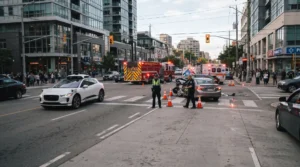
A fire truck might stop across several lanes. A police officer might direct vehicles through a red light. Firefighters may place cones at unusual angles to divert traffic. An ambulance may approach from behind while other vehicles move toward the shoulder.
Smoke, damaged vehicles, debris, flashing lights, pedestrians, responders, and temporary barriers can appear simultaneously.
Human drivers often interpret these situations through context. They may recognize a firefighter’s hand gesture, understand that flashing emergency lights require them to slow down, or realize that an apparently open lane has been temporarily closed.
Driverless vehicles must reach similar conclusions using sensors, maps, software, and automated decision making.
According to NHTSA, emergency scenes should not be treated as unusual scenarios that automated vehicles rarely encounter. The agency described the ability to interact safely with first responders as a fundamental safety issue for automated driving systems.
What Driverless Vehicles Need to Recognize
Autonomous vehicles rely on combinations of cameras, radar, lidar, GPS information, detailed maps, and computer processing.
These systems attempt to identify vehicles, pedestrians, road markings, traffic signals, and surrounding objects.
Emergency situations add another layer of complexity.
A driverless vehicle may need to distinguish a stationary ambulance from ordinary parked traffic. It may need to recognize that flashing lights require a change in normal driving behavior. It may also need to interpret temporary traffic cones or hand signals that conflict with its mapped route.
For example, a navigation system might identify a road as open while police officers have temporarily closed it because of a crash.
A human driver can see the closure and follow an officer’s directions. An automated system needs sufficient perception and decision making capabilities to reach the same result.
This difference can become especially important when seconds matter.
Emergency responders often rely on drivers clearing lanes quickly so ambulances, fire engines, and police vehicles can reach people who need assistance.
NHTSA Raised Concerns About First Responder Interference in 2026
On July 8, 2026, NHTSA issued a public call to automated vehicle developers concerning interactions between driverless vehicles and emergency responders.
The agency said it had documented multiple incidents involving driverless automated vehicles entering active scenes or obstructing emergency operations. NHTSA also pointed to situations where automated systems reportedly failed to recognize flashing lights, flares, traffic cones, smoke, or fire.
The agency called on developers and operators to prioritize improvements in these areas and indicated that federal enforcement authority may apply when significant vehicle safety concerns remain unresolved.
This federal attention makes first responder interaction an increasingly important issue in the broader discussion about autonomous vehicle safety.
Drivers interested in the general liability questions surrounding robotaxis can also read our guide on robotaxi and self driving crash liability. The article discusses the parties and evidence that may become relevant when no traditional driver is operating the vehicle.
Emergency Vehicle Accidents Can Take Several Forms
An accident involving an autonomous vehicle and emergency activity does not necessarily mean that the driverless vehicle directly collided with an ambulance or fire truck.
Several situations are possible.
An autonomous vehicle might fail to yield to an approaching ambulance.
It could enter a lane that firefighters temporarily closed.
A driverless vehicle might stop in a location that prevents an emergency vehicle from passing.
It might proceed through an intersection while a police officer is directing traffic differently from the normal signal pattern.
A vehicle could also make an unexpected maneuver that forces another driver or emergency responder to react suddenly.
These incidents show why autonomous vehicle accident investigations often require more than determining which vehicle physically made contact.
The system’s decisions before the collision may be equally significant.
Can a Driverless Car Understand Police Hand Signals?
One difficult problem involves communication between humans and automated systems.
Police officers frequently use hand movements to direct vehicles through intersections or around accident scenes. Firefighters may also gesture toward drivers when establishing temporary traffic routes.
These instructions are flexible and highly dependent on context.
Automated systems need to interpret the person, determine that the person has authority to direct traffic, understand the gesture, and decide whether it overrides another traffic control device.
That process becomes more difficult when visibility is poor or several responders are moving around the road.
Darkness, rain, glare, smoke, flashing lights, and crowded scenes can further complicate perception.
A failure at any stage can result in hesitation or an incorrect maneuver.
Driverless Cars May Also Need to React to Emergency Sounds
Emergency lights are only part of the issue.
Human drivers often hear a siren before they see the emergency vehicle.
Automated systems may rely more heavily on visual sensors and location information, although system design varies among developers.
This creates additional questions about how quickly an autonomous vehicle can detect an approaching emergency vehicle that remains outside its cameras’ immediate field of view.
The system must then determine an appropriate response.
Pulling over immediately may not always be safe. The shoulder could be blocked, a pedestrian might be nearby, or another vehicle might already occupy the space.
The driverless system needs to evaluate these conditions while still creating room for the emergency vehicle.
Who Could Be Responsible for an Emergency Vehicle Accident?
There is no single answer for every autonomous vehicle crash.
Liability depends on what caused the incident and the law of the state where it occurred.
A traditional crash often focuses on the behavior of human drivers.
A driverless accident can shift attention toward companies and technology.
Several entities may require investigation.
The Autonomous Vehicle Operator
A company operating a fleet of driverless vehicles could face questions about deployment, monitoring, maintenance, or responses to known safety concerns.
Investigators may examine whether the vehicle was operating within its intended geographic area and environmental conditions.
They may also review whether previous incidents identified similar problems.
The Vehicle Manufacturer
A hardware or mechanical problem could potentially involve the vehicle manufacturer.
Examples might include problems affecting steering, braking, electrical systems, or other vehicle components.
The Automated Driving System Developer
The company responsible for the automated driving system may become relevant when perception, planning, or decision making contributed to the event.
Questions may involve whether the system properly detected emergency vehicles, temporary barriers, or first responder instructions.
Component Manufacturers
Autonomous vehicles depend on numerous components.
Cameras, sensors, processors, braking components, and other equipment can affect vehicle performance.
If a component malfunction contributed to a crash, investigators may examine its design, manufacturing history, and maintenance.
Maintenance Providers
Sensors and cameras need to function properly.
Damage, dirt, misalignment, or improper repairs may reduce performance.
Maintenance records can help determine whether the vehicle received appropriate inspection and service.
Other Drivers
A driverless vehicle is not necessarily responsible simply because it was involved.
A human driver could still cause or contribute to an accident through speeding, distraction, unsafe lane changes, failure to yield, or other conduct.
Responsibility can involve more than one party.
Readers seeking a broader explanation of fault may review our resource on how to prove fault in a personal injury case.
Product Liability May Become Part of the Investigation
Some autonomous vehicle cases may raise product liability questions rather than traditional driver negligence alone.
Suppose an automated driving system repeatedly fails to identify a particular emergency signal under conditions that the system should reasonably handle.
An investigation may examine whether a design issue, manufacturing issue, inadequate warning, or other product related problem contributed to the accident.
Product liability rules differ by state.
The technical nature of autonomous driving systems also means that expert analysis may become necessary to understand what occurred.
Engineers, accident reconstruction specialists, software professionals, vehicle safety specialists, and other technical experts may examine system performance.
Federal Rules Are Still Developing
Autonomous vehicle regulation in the United States continues to evolve.
NHTSA oversees vehicle safety at the federal level and has been developing additional standards and guidance related to automated driving.
On July 30, 2026, the agency announced efforts to accelerate development of AV performance standards and update federal vehicle requirements for vehicles designed without traditional human controls.
NHTSA has also stated that it is working toward federal performance requirements specifically addressing real world automated driving behavior.
At the same time, state laws continue to affect vehicle operation, insurance, testing, and liability.
This means a driverless accident case may involve a combination of federal vehicle safety regulations and state civil liability rules.
Crash Reporting Provides Additional Federal Oversight
NHTSA maintains a crash reporting framework covering certain vehicles equipped with automated driving systems and Level 2 advanced driver assistance systems.
Its Standing General Order requires identified manufacturers and operators to report qualifying crashes involving these technologies.
For automated driving systems, reporting can apply when the ADS was in use within 30 seconds before a qualifying crash. NHTSA uses the information to identify potential safety issues and support investigations or enforcement when necessary.
The reporting database also provides researchers and regulators with information about real world incidents.
However, NHTSA cautions that raw crash totals cannot automatically be used to compare the safety of different manufacturers because the figures are not normalized for factors such as miles traveled or operating environments.
Evidence Can Be More Complex Than in an Ordinary Car Accident
One of the biggest differences between a driverless car accident and a conventional collision is the amount of electronic information potentially available.
A traditional crash investigation may rely heavily on vehicle damage, skid marks, traffic cameras, witness statements, and police reports.
Those sources remain relevant.
Driverless vehicles may add several additional categories of evidence.
Sensor Records
Cameras, lidar systems, radar, and other equipment may record what the vehicle detected before and during the incident.
These records can help establish whether the system recognized an ambulance, firefighter, traffic cone, pedestrian, or road closure.
Vehicle Telemetry
Vehicle telemetry may contain information about speed, location, direction, acceleration, and braking.
This information can help reconstruct the vehicle’s movement.
Automated Driving System Logs
Software records can show how the automated driving system classified objects and selected a response.
For example, investigators may seek to determine whether the vehicle identified an emergency vehicle as an ordinary stopped vehicle.
Onboard Video
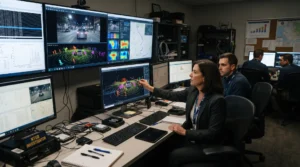
Autonomous vehicle fleets commonly use cameras for system perception and operational monitoring.
Video can provide context regarding lighting, traffic, pedestrians, road conditions, and emergency equipment.
Remote Assistance Records
Some driverless fleets use remote personnel who may provide assistance when vehicles encounter unusual situations.
Communication logs can help determine whether remote intervention occurred and what information was available.
Software Update History
Automated vehicle behavior can change through software updates.
Investigators may review which software version was installed at the time of the accident and whether later updates addressed similar behavior.
Preserving Digital Evidence After a Driverless Accident
Electronic information can become particularly significant in an autonomous vehicle claim.
People involved in an accident may document basic information at the scene when it is safe to do so.
Photographs can capture the vehicle, road layout, emergency vehicles, temporary signs, traffic cones, visible damage, and surrounding conditions.
Witness information can also become useful.
A person who observed the driverless vehicle enter an emergency scene may remember details that a camera did not record clearly.
Police reports and emergency response records can provide additional context.
Legal professionals handling an autonomous vehicle claim may also examine whether relevant electronic records should be preserved.
The exact procedures depend on the circumstances and applicable law.
What If an Autonomous Vehicle Blocks an Ambulance Without Causing a Collision?
Physical contact is not the only possible source of harm.
A driverless vehicle might obstruct an ambulance, delay emergency access, or interfere with first responders without striking another vehicle.
These situations can present more difficult causation questions.
A legal claim generally requires evidence connecting the alleged conduct to the harm being claimed.
When several events occur between the obstruction and an injury, establishing that connection may require medical, technical, and factual analysis.
These cases can therefore differ significantly from a straightforward two vehicle collision.
What If a Driverless Car Enters an Active Crash Scene?
An existing accident scene is already hazardous.
Emergency personnel may stand close to moving traffic. Damaged vehicles may block normal lanes. Debris may cover the roadway.
If an autonomous vehicle enters that area unexpectedly, it can create additional danger.
The investigation may ask whether the vehicle detected the closure, whether emergency signals were visible, and why the system continued forward.
It may also examine whether the road configuration was within the automated driving system’s intended operating conditions.
What Is an Operational Design Domain?
Autonomous driving systems are often designed to operate under defined conditions.
These conditions can involve geographic areas, road types, weather, speed ranges, or other limitations.
The collection of conditions under which an automated driving system is designed to operate is often called its operational design domain.
This concept can become relevant after a crash.
Investigators may examine whether a company deployed a vehicle in circumstances the system was designed to handle.
An emergency scene can also create temporary conditions that differ significantly from normal road operations.
Human Drivers Still Have Responsibilities Around Driverless Cars
The presence of an autonomous vehicle does not remove the obligations of other motorists.
Drivers still need to follow traffic rules, yield to emergency vehicles, avoid distraction, and maintain control of their vehicles.
A collision involving a robotaxi and an ambulance may therefore have several contributing causes.
Suppose a driverless vehicle stops unexpectedly after detecting a fire truck.
A human driver following too closely could strike the autonomous vehicle from behind.
The investigation would need to examine the conduct and system behavior of everyone involved rather than assuming that one party bears complete responsibility.
Different Levels of Automation Matter
Not every vehicle marketed with automated technology is genuinely driverless.
NHTSA distinguishes among several levels of driving automation.
Lower level driver assistance systems can control specific driving functions, but the human driver remains responsible for operating the vehicle.
NHTSA states that the highest levels of driving automation currently available to ordinary consumers still require drivers to remain engaged, while truly driverless systems are generally associated with more advanced deployments.
This distinction matters after a crash.
If a driver was required to supervise the system, investigators may examine whether that person remained attentive.
A fully driverless fleet vehicle presents different questions because no person inside may have been responsible for steering or braking.
Emergency Responders Face New Challenges
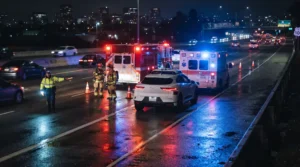
First responders already work in dangerous roadside environments.
Passing traffic can expose firefighters, paramedics, police officers, and tow operators to significant risk.
Driverless vehicles introduce another factor.
Responders may not know whether a vehicle has a driver inside. They may also have limited ways to communicate directly with the automated driving system.
Traditional interactions such as eye contact, spoken instructions, and gestures may not work in the same way.
NHTSA’s 2026 attention to this issue reflects the need for automated vehicles to function around the same emergency conditions that human drivers regularly encounter.
Autonomous Vehicles Could Still Offer Safety Benefits
Concerns about emergency response interaction do not mean autonomous vehicles are inherently less safe in every situation.
Automated driving technology is being developed partly because computers do not become intoxicated, tired, or distracted in the same manner as human drivers.
NHTSA recognizes that automated vehicles may provide meaningful safety and mobility benefits as the technology develops.
The challenge is ensuring that automated systems can handle ordinary traffic and complicated real world events.
Emergency scenes provide a useful test because they combine temporary rules, unusual road layouts, human instructions, and urgent decision making.
Current Safety Questions Remain Important
The autonomous vehicle industry is developing rapidly.
Federal regulators are simultaneously adapting existing vehicle rules and working toward new performance standards.
NHTSA announced in July 2026 that it was accelerating work on the first federal AV performance standards.
These standards may help create clearer expectations for how driverless systems perform in complex environments.
Until those frameworks mature, individual accidents can continue to raise questions involving negligence, product liability, fleet operation, software behavior, and government safety requirements.
What to Do After an Accident Involving a Driverless Vehicle
The immediate priorities after any serious collision remain personal safety and emergency medical assistance.
When possible, the vehicle and surrounding conditions may also be documented.
Autonomous vehicle accidents can involve evidence that is not visible at the scene.
The vehicle’s system status, sensor recordings, software version, remote assistance activity, and fleet records may all become relevant.
People involved in these accidents may also need to identify the company operating the vehicle because ownership and operational responsibility may not be obvious from the passenger compartment.
The vehicle itself should not be assumed to function like an ordinary privately owned car.
Why These Cases Can Become Legally Complicated
Driverless car litigation can combine several areas of law.
Traditional negligence may apply to another human driver or a company responsible for operating vehicles.
Product liability principles may become relevant when a vehicle or automated system is alleged to contain a defect.
Commercial insurance issues may arise because many driverless vehicles operate as part of corporate fleets.
State regulations can affect who may operate autonomous vehicles and what insurance requirements apply.
Federal rules govern many aspects of vehicle safety.
These overlapping issues can make an autonomous vehicle accident substantially different from an ordinary car accident.
The Future of Driverless Cars Around Emergency Vehicles
Automated vehicles need to function safely in environments that are not perfectly predictable.
Emergency scenes represent one of the clearest examples.
An automated system may encounter police directing traffic against normal signals, firefighters standing in traffic lanes, temporary barriers, approaching ambulances, smoke, damaged vehicles, and pedestrians moving unpredictably.
A reliable driverless system needs to interpret these conditions without creating additional hazards.
The federal government is placing greater attention on this issue.
NHTSA has called first responder interaction a significant safety concern and has asked automated vehicle developers to prioritize solutions. The agency is also working toward broader performance standards for automated driving systems.
As deployment expands across the United States, accidents involving emergency vehicles may continue to shape discussions about autonomous vehicle safety and legal responsibility.
Understanding Liability After a Driverless Vehicle Accident
A driverless car accident near an emergency scene may involve far more than determining which vehicle had the right of way.
Investigators may need to examine what the automated system detected, how it interpreted emergency activity, whether it followed first responder directions, and whether another vehicle contributed to the crash.
Manufacturers, fleet operators, software developers, component suppliers, maintenance providers, and human drivers may all require consideration depending on the facts.
Accident victims can learn more about these broader issues in our guide to robotaxi and self driving crash liability and our article explaining how fault may be established in a personal injury case.
For authoritative information about federal automated vehicle policy and current first responder concerns, visit the National Highway Traffic Safety Administration’s automated vehicle safety resources.
Driverless cars may eventually change transportation across the United States. Their ability to recognize and respond safely to emergency vehicles, law enforcement officers, firefighters, paramedics, and unusual road conditions remains an important part of that development.